Source hardtop kids electric mini jeep for Parks, Schools, and Events
Compare 28 hardtop kids electric mini jeep listings from verified Chinese suppliers. Buyers can evaluate specifications like battery capacity, motor power, and speed to select the right vehicle for recreational or commercial use.
Key considerations
Products List




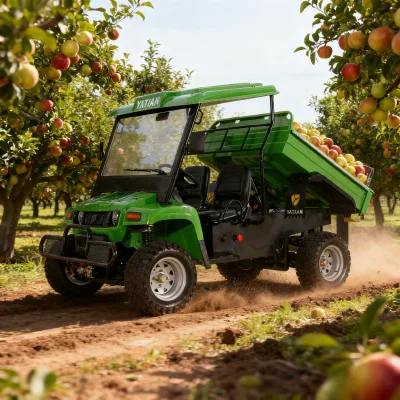


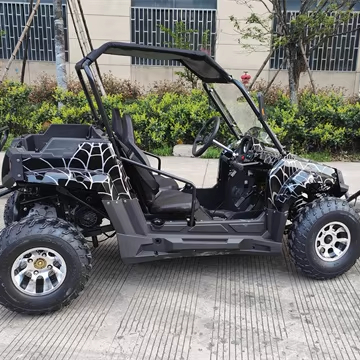
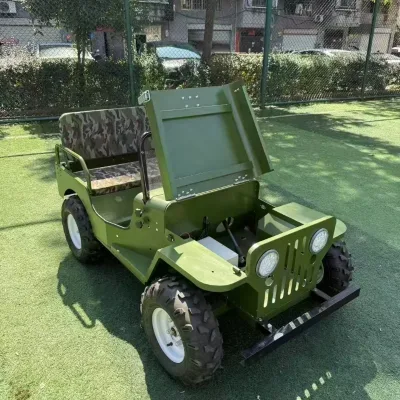
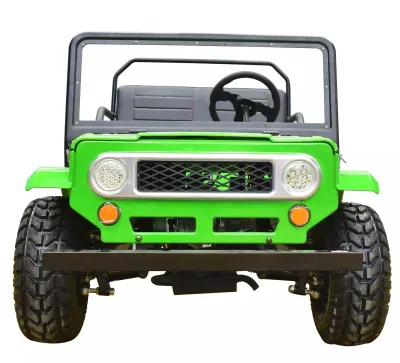
Comprehensive Sourcing Guide
Strategic Sourcing Guide for Hardtop Kids Electric Mini Jeeps
Understanding the Product Category and Market Variance
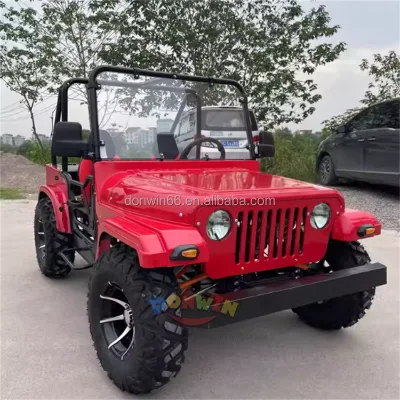
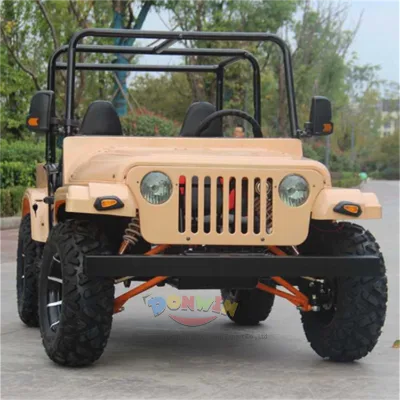
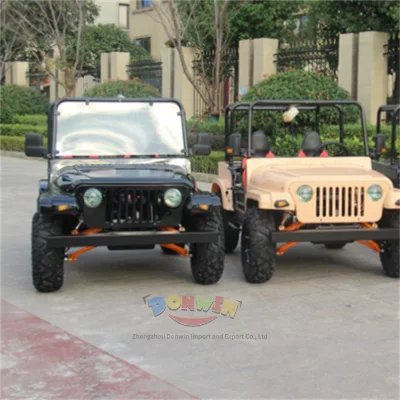
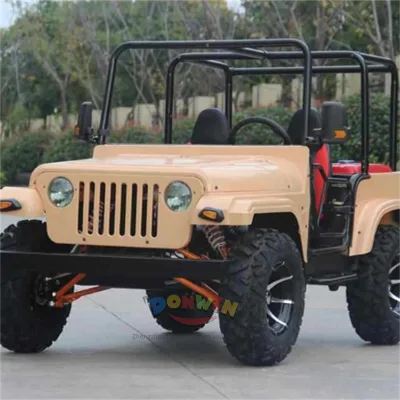
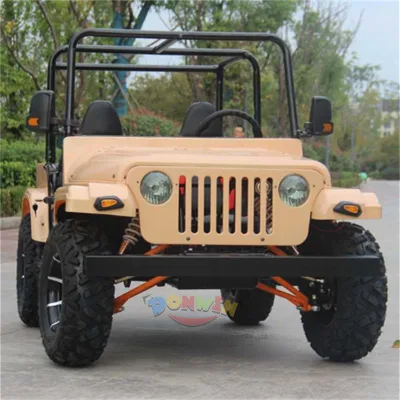
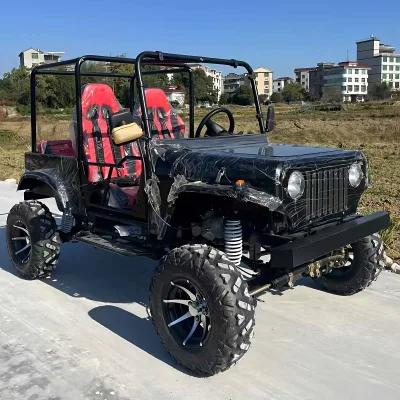
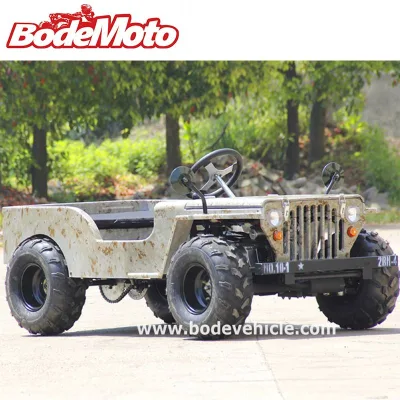
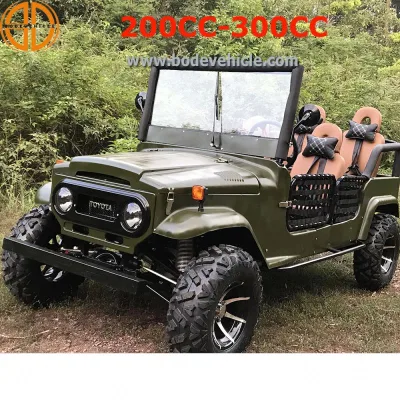
The search term "hardtop kids electric mini jeep" describes a specific segment of recreational and utility vehicles designed for younger users or controlled environments. However, the current market data reveals a significant divergence in product definitions that buyers must navigate carefully. While the core keyword implies a child-focused, battery-operated vehicle, the available supply chain data indicates a mix of products ranging from small electric buggies to larger, gasoline-powered utility carts.
Buyers must first distinguish between the "Jeep Car" or "Buggy" classifications found in supplier listings and the specific "hardtop" requirement. The observed product attributes show a wide spectrum of configurations. Some listings describe vehicles with an "Iron Frame + Carton" packing structure and a "Without Door" configuration, which may not meet the expectation of a fully enclosed hardtop. Conversely, other entries reference "250CC Jeep Cart" models with "Car Paint" surface finishes and "Leather" seats, suggesting a more robust, adult-oriented utility vehicle rather than a toy.
The critical observation for procurement is that the term "Mini Jeep" is often used loosely in B2B catalogs to describe anything from a 48V electric go-kart to a 250CC gasoline utility vehicle. A buyer seeking a hardtop electric model for children must rigorously filter suppliers based on the "Fuel" attribute. The data confirms the existence of "Electric" fuel types with "Battery 48V 20ah" or "60V,52A" power sources, which aligns with the electric requirement. However, other listings explicitly state "Gasoline" as the ground clearance or fuel type, and "2 Stroke" or "Four Stoke" engine types, which are incompatible with a pure electric mini jeep requirement.
Technical Specifications and Performance Verification
When evaluating technical specifications, buyers must cross-reference the power source, motor output, and physical dimensions to ensure the vehicle meets safety and performance standards for the intended age group. The data presents conflicting engine types, including "1500W" electric motors and "3000W" motors, alongside "250CC" displacement engines. For an electric mini jeep, the focus should remain on the electric motor specifications.
The maximum speed is a critical safety parameter. The provided facts list a "Maximum Speed" of "35km/H" for certain electric models, which is generally appropriate for children's recreational use. However, other entries in the dataset indicate a "Maximum Speed" of "80 Km/h," which is dangerously high for a "kids" vehicle and likely belongs to a different product category, such as an adult utility buggy. Buyers must verify that the specific unit they are sourcing does not exceed safe speed limits for children, typically capped between 10km and 35km/h.
Physical dimensions and weight are equally important for stability and transport. The observed data includes a "N.W." (Net Weight) of 225kg and a "G.W." (Gross Weight) of 265kg. These figures suggest a heavy-duty construction, potentially using "Steel Tube" material. For a "hardtop" configuration, the structural integrity provided by the steel frame is essential. The "Wheelbase" is listed as 1450mm, and the "Ground Clearance" varies, with some entries noting "265mm" while others oddly list "Gasoline" as the ground clearance, indicating a data entry error in the source listings that requires supplier clarification.
The "Transmission System" is another key differentiator. Some electric models feature an "Axle Belt Differential" with an "Auto" transmission, while others list a "Clutch: Automatic." For a child's vehicle, a simple automatic transmission is preferable to reduce operator error. The "Minimum Turning Diameter" of 8m is a standard metric for maneuverability in tight spaces like playgrounds or indoor facilities. Buyers should ensure the turning radius aligns with the intended operating environment.
Compliance, Certification, and Safety Standards
Safety compliance is non-negotiable when sourcing vehicles for children. The data confirms that several products carry "CE" certification or "CE Certifiate," which is a mandatory requirement for selling products in the European market. This certification indicates that the manufacturer claims compliance with EU safety, health, and environmental protection requirements. However, the presence of a CE mark on a listing does not guarantee that every specific unit in a batch meets the standard; it is a declaration by the supplier that must be verified through third-party testing reports.
Beyond CE, buyers should investigate if the vehicle meets specific child safety standards such as ASTM F963 (Standard Consumer Safety Specification for Toy Safety) in the United States or EN 71 in Europe. The provided facts do not list these specific toy safety standards, only the general CE mark. Therefore, the procurement strategy must include a requirement for the supplier to provide valid test reports from accredited laboratories that specifically address the "hardtop" structure, electrical safety, and battery containment.
The "Condition" of the products is listed as "New" or "Brand-new," which is standard for B2B transactions. However, the "Warranty" period varies, with one entry specifying "2 Years." A two-year warranty is a strong indicator of supplier confidence in the product's durability, particularly for the electrical components like the "Battery 48V 20ah" or "60V,52A" systems. Buyers should ensure the warranty covers the battery, motor, and structural frame, as these are the most common points of failure.
Cost Drivers and Pricing Structure Analysis
The pricing landscape for this category is highly volatile, with an observed range from $41.2 to $8,136.61 USD. This extreme variance is not indicative of a single product line but rather a reflection of the diverse product types available under the "mini jeep" keyword. The lower end of the price spectrum likely corresponds to simple, open-frame electric buggies with minimal features, while the higher end likely includes fully enclosed hardtop models, larger batteries, or gasoline-powered utility vehicles.
Several factors drive these costs. First, the "Power Source" significantly impacts price. A "60V,52A" battery system is more expensive than a "48V 20ah" system due to the higher capacity and voltage. Second, the "Material" of construction, such as "Steel Tube" versus plastic or aluminum, affects the base cost. Third, the "Surface Paint" process, described as "Car Paint" in the data, adds value and cost compared to standard powder coating.
The "MOQ" (Minimum Order Quantity) is another critical cost driver. The data shows an MOQ range of 1 to 120 units. Some suppliers offer "1 Piece" or "1 Set" as the minimum, which is ideal for testing or small-scale procurement. However, larger orders may unlock better pricing tiers. Buyers must calculate the total landed cost, including shipping, which is influenced by the "prod_standard" dimensions of 225012501250mm and the "Carton Size" of 22501250670mm. These large dimensions suggest that shipping will be volumetric, and buyers should negotiate freight terms carefully to avoid unexpected logistics costs.
Supplier Evaluation and Origin Verification
The geographic origin of the products is a key factor in supplier evaluation. The data consistently lists "China" as the "prod_origin," with specific mentions of "Henan, China" as the "Place of Origin." Henan is a known manufacturing hub for automotive and machinery components. While this provides a baseline for sourcing, buyers must verify the specific factory's capabilities. The "Brand" names vary, with "Suyang" and "Donwin" appearing in the listings. Relying solely on brand names in B2B sourcing is risky; the focus should be on the manufacturer's ability to produce the specific "hardtop" configuration requested.
When evaluating suppliers, buyers should look for transparency regarding the "Type" of vehicle. The data lists "Single Cylinder, Four Stoke" and "2 Stroke" engine types, which are irrelevant for electric models but indicate that some suppliers may be mislabeling their products or offering mixed catalogs. A reputable supplier should clearly distinguish between their electric and gasoline lines. The "Product name" field also varies, ranging from "Jeep Car" to "250CC Jeep Cart." Buyers must ensure the supplier's product description matches the exact "hardtop kids electric" requirement, not just the generic "Jeep" label.
The "Selling Units" are listed as "Single item," which simplifies the ordering process for small batches. However, for larger orders, buyers should verify if the supplier can handle customizations, such as "Color: Customized," which is noted in the data. Customization often requires higher MOQs and longer lead times, which must be factored into the procurement timeline.
Quality Control and Long-Term Procurement Strategy
Quality control for electric mini jeeps must focus on the electrical system and structural integrity. The "Battery" specifications, such as "48V 20ah" or "60V,52A," require rigorous testing for safety and longevity. Buyers should request discharge tests and cycle life data to ensure the battery performs as advertised. The "Brake Type" is listed as "Disc Brake," which is a reliable stopping mechanism, but the condition of the braking system must be verified upon delivery.
The "Structure" of the vehicle is another area of concern. While some listings specify "Without Door," a hardtop model should ideally have a roof and side protection. Buyers must confirm that the "Iron Frame + Carton" packing method ensures the vehicle arrives without structural damage. The "225012501250(mm)" standard size suggests a large footprint, and the packaging must be robust enough to protect the "Steel Tube" frame during transit.
For long-term procurement, the "Warranty" of "2 Years" is a significant advantage. However, buyers should also consider the availability of spare parts. The "Extension Mileage" is listed as ">35km," which indicates the range of the vehicle. Over time, battery degradation will reduce this range, and the ability to replace batteries or motors is crucial. Buyers should negotiate a parts supply agreement alongside the initial order to ensure long-term support.
Comparative Analysis of Product Attributes
To assist in decision-making, the following table summarizes the key attribute variations observed in the market data. This comparison highlights the importance of filtering for the specific "hardtop electric" requirement.
| Attribute | Electric Mini Jeep (Target) | Utility Buggy / Gasoline (Non-Target) |
|---|---|---|
| Fuel Type | Electric (Battery 48V/60V) | Gasoline (250CC, 2 Stroke/4 Stroke) |
| Engine Type | Electric Motor (1500W/3000W) | Internal Combustion Engine |
| Max Speed | 35 km/h (Safe for kids) | 80 km/h (High speed, unsafe for kids) |
| Structure | Hardtop (Required), Steel Frame | Often Without Door, Open Frame |
| Certification | CE (Mandatory), Toy Safety Standards | CE (Machinery standards) |
| MOQ | 1 Piece to 120 Sets | 1 Piece to 120 Sets |
| Price Range | Variable ($41 - $8000+) | Variable ($41 - $8000+) |
This table underscores that while the price and MOQ ranges overlap, the technical specifications differ drastically. A buyer must use these attributes as a strict filter to avoid purchasing a high-speed gasoline utility vehicle when a low-speed electric toy is required.
Final Procurement Considerations
In conclusion, sourcing a hardtop kids electric mini jeep requires a disciplined approach to filtering the vast array of available products. The market data reveals a mix of electric and gasoline vehicles, with significant variations in speed, power, and structural design. Buyers must prioritize suppliers who can clearly demonstrate compliance with child safety standards, provide valid CE certification, and offer transparent technical specifications that align with the "electric" and "hardtop" requirements.
The extreme price range and varying MOQs suggest that buyers should start with a small trial order to verify product quality and supplier reliability before committing to larger volumes. The "2 Years" warranty and "Steel Tube" construction are positive indicators of durability, but these must be backed by concrete testing data. By focusing on the specific attributes of the electric power source, speed limits, and safety certifications, buyers can navigate the complex B2B landscape and secure a product that meets both safety and performance expectations for children.
FAQs
What is the maximum speed for these electric mini jeeps?
The maximum speed is 35 km/h for safe child use, though some listings show 80 km/h for adult utility buggies. Buyers must verify the specific unit to ensure it does not exceed safe limits for children.
Which battery specifications are available for these vehicles?
Available battery options include 48V 20ah and 60V 52A configurations. The 60V 52A system offers higher capacity and range compared to the 48V 20ah option found in other models.
Can I find hardtop models with CE certification?
Yes, CE certification is available for these vehicles, but buyers must verify specific test reports for toy safety standards like ASTM F963. The CE mark indicates compliance with EU safety requirements for the listed products.
What is the minimum order quantity for these jeeps?
The minimum order quantity ranges from 1 piece to 120 sets depending on the supplier. Some vendors offer single item purchases for testing, while larger orders may unlock better pricing tiers.
How does the price vary across different models?
Prices range from 41.2 to 8136.61 USD based on power source and construction materials. Higher costs typically reflect larger batteries, steel tube frames, and car paint finishes compared to basic open-frame models.
Where are these vehicles manufactured and shipped from?
Products originate from China, specifically Henan, which is a known manufacturing hub for automotive components. The standard packaging dimensions are 2250*1250*1250mm, influencing shipping costs and logistics planning.
What warranty coverage is typically offered for these units?
A 2-year warranty is available for some models, covering electrical components and structural frames. Buyers should confirm if the warranty explicitly includes the battery and motor to ensure long-term support.